
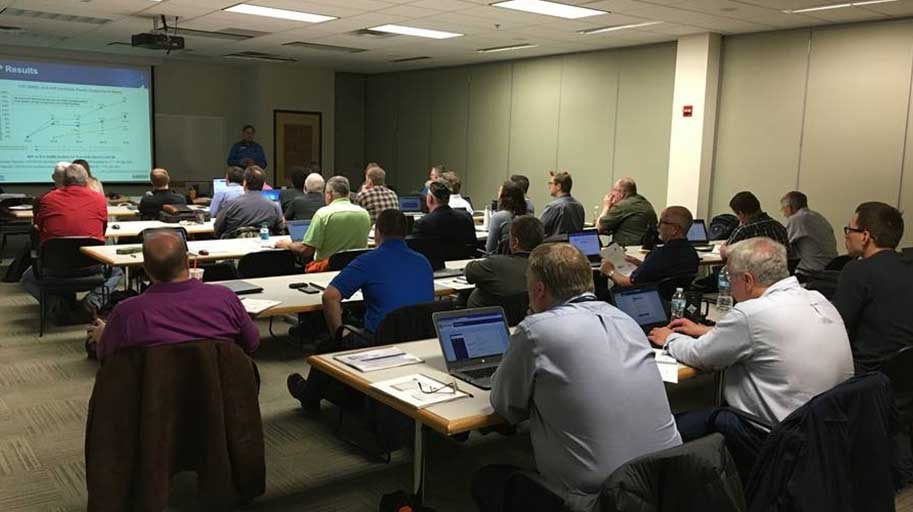

Through Better Plants, the U.S. Department of Energy (DOE), offers Virtual Trainings (VTs), the online version of the multi-day workshops known as In-Plant Trainings (INPLTs). As with in-person trainings, VTs help attendees identify energy savings opportunities and implement projects to realize cost savings.
These trainings enhance attendees’ understanding of working principles, knowledge of best practices, and capability of analyzing the performance of industrial systems. DOE has hosted over 40 virtual trainings for more than 2,500 participants, identifying more than $11 million in cost savings opportunities.
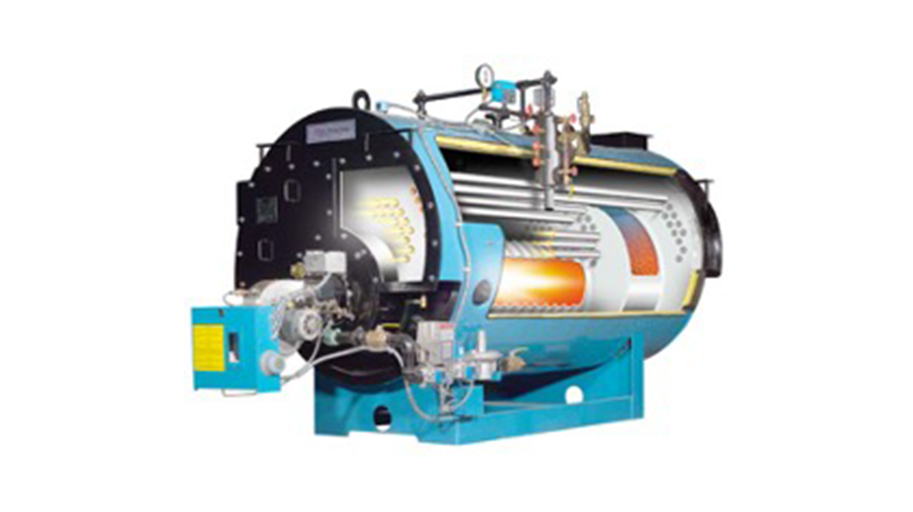
Better Plants will deliver a VT on Steam Systems from October 22 to December 17, 2026. Participants will learn about industrial steam system fundamentals and how to perform a system-specific energy assessment, including hands-on training using the Steam Systems Assessment Module in MEASUR.
The Steam Systems VT is comprised of 2.5-hour online training sessions (2-hour formal training and an optional 0.5-hour Q&A) that will be delivered by industrial experts and Technical Account Managers every Thursday, 2:00 PM–4:30 PM ET for eight (8) weeks — with no session scheduled for November 26. Participation is open to all U.S. manufacturers and is offered at no cost.
To maximize the benefits from attending VTs, participants will receive homework assignments at the end of each session that will be due by the next session. These assignments are designed to enhance participants’ understanding of the concepts and tools and will help them identify and quantify steam savings opportunities.
After completing the VT, participants may request a certificate for Professional Development Hours (PDHs). Participants will leave with practical strategies and actionable insights they can apply to understand, evaluate, and effectively communicate the total value of energy projects.
Oct 22 to Dec 17 2026; Every Thursday 2:00 PM–4:30 PM ET (2.0-hour formal training + optional 0.5-hour Q&A)
Week 1 – Industrial Steam Systems Fundamentals; Oct. 22, 2026
An overview of the overall process of conducting a virtual steam training, including an explanation on the fundamentals of industrial steam systems.
Week 2 – Steam System Generation and Introduction to DOE’s MEASUR Tool; Oct. 30, 2026
An emphasis on steam system generation, which will include an understanding of the measurements needed to calculate direct and indirect boiler performance and a demonstration of the calculators available within MEASUR.
Week 3 – Steam Systems Generation & Cogeneration (CHP); Nov. 5, 2026
An explanation of how to evaluate cogeneration systems, including back-pressure and condensing steam turbines and gas turbines with heat recover steam generators (HRSG), while highlighting the different savings metrics used to assess system performance.
Week 4 – Steam System Distribution, End-Use & Condensate Recovery; Nov. 12, 2026
A review of steam distribution systems, end users, and condensed recovery. Participants will also have an opportunity to develop a baseline model example of the industrial steam system using MEASUR.
Week 5 – Energy Saving Opportunities in the Generation Area; Nov. 19, 2026
A discussion on energy savings opportunities, including stack heat recovery, excess air combustion control, blowdown energy recovery, and shell loss reduction, with hands-on use of the MEASUR baseline model to conduct “what-if” analyses and quantify benefits.
No Session; Nov. 26, 2026
Week 6 – Energy Saving Opportunities in Cogeneration (CHP) Areas; Dec. 3, 2026
A review of the cost-saving opportunities and energy savings improvements associated with back-pressure and condensing steam turbines.
Week 7 – Energy Saving Opportunities in Distribution, End-use and Condensate Recovery Areas; Dec. 10, 2026
A demonstration of the tools and strategies for improving steam system performance which will include insulation evaluation using steam trap management, condensate recovery, and low-pressure steam (waste heat) applications. Â
Week 8 – Session Review and Participant Report-Outs; Dec. 17, 2026
An analysis of the content covered throughout the training, including participant report-outs on securing management buy-in and moving projects forward.

Mr. Riyaz Papar
Mr. Riyaz Papar is a registered Professional Engineer (ME), a Certified Energy Manager and a Fellow of ASME and ASHRAE. He is the CEO of C2A Sustainable Solutions, a company based in The Woodlands, Texas.Â
Mr. Papar is a US DOE Senior Instructor and a US DOE Qualified Specialist (Steam). Mr. Papar is also an Industrial Heating and Cooling System International Expert at United Nations Industrial Development Organization.Â
Mr. Papar has spent almost three decades in energy efficiency consulting for thermal systems – steam, cogeneration, waste heat recovery, chilled water and refrigeration. Using a systems approach methodology in thermal systems, he has completed ~150 energy assessments both in the US and internationally. Several of these energy assessments have resulted in implemented projects that have continued to save millions of dollars, valuable energy resources and reduced greenhouse gas emissions world-wide.
Mr. Papar has trained more than 7,500 industry personnel internationally. He has worked as Lead Instructor/Facilitator with multinational government and industrial agencies in South Africa, Vietnam, Thailand, Indonesia, Malaysia, Philippines, China, India, Kazakhstan, Egypt, Myanmar and Mauritius to disseminate this capacity building effort.
Mr. Papar has been an author of more than 50 Technical Publications in Journals, Conference Proceedings & Trade Magazines. Mr. Papar has also been an “Energy Saver” columnist for the Chemical Processing magazine published by PutmanMedia.
Mr. Papar has a Master’s (ME) from the University of Maryland, College Park and a Bachelor’s (ME) from the Indian Institute of Technology, Mumba